

While we were staying in the Kejimkujik National Park we were thankful for the days of rain knowing that parts of Nova Scotia were desperate for fire-quenching water. Since we were not able to walk any of the trails, due to an outdoor ban, we decided to visit Nova Scotia’s coast of the Bay of Fundy. It was a good decision and the small town of Annapolis Royal was a great place to start.
Three Port Royals
When you say that you visited Port Royal it can be rather confusing for that term describes three different areas located on the west coast of Nova Scotia. When Samuel de Champlain sailed into what is today the Annapolis Basin which joins the Annapolis River and the Bay of Fundy, he named it “Port Royal.” In the 1630s Port Royal referred not only to the Annapolis Basin and the Annapolis River but also the town where today you will find the village of Annapolis Royal. Lastly, Port Royal is the name of the National Historic site where they have reconstructed the original French settlement that Champlain built in Nova Scotia. Confused yet?
Port Royal National Historic Site
First, a little background… Port Royal was one of the earliest settlements in North America. The French king Henri IV granted a large part of the land in the Americas to fur traders. In the Spring of 1605, Samuel de Champlain and Sieur de Mons came to Nova Scotia in search of a good place to establish a settlement and a trading post. They decided to build at the junction where the Annapolis River runs into the Annapolis Basin. They called their settlement Port Royal but often referred to it as “the Habitation.” They also cultivated a friendly relationship with the Mi’kmaq First Nations people.
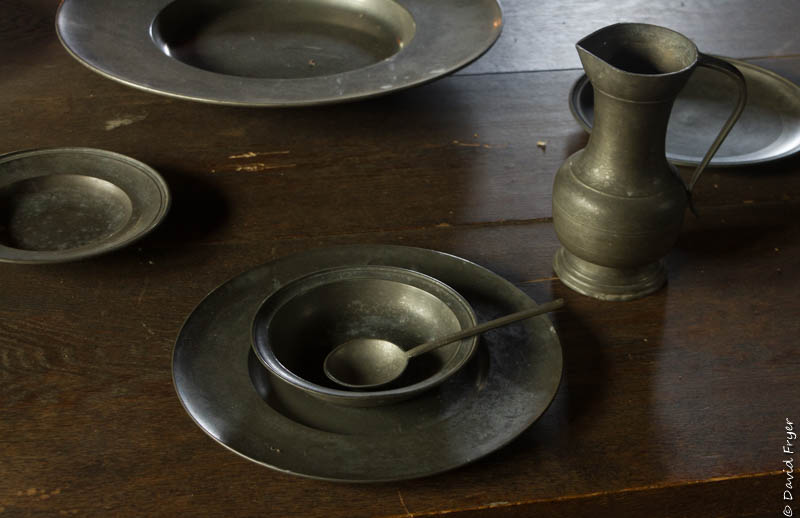
To raise the spirits of the residents of the Habitation during the long winter months, Samuel de Champlain introduced a tradition called the Order of Good Cheer. From time to time different members of the colony would provide food for a banquet and entertainment for the settlers and often times prominent Mi’kmaq leaders were invited to the festivities.
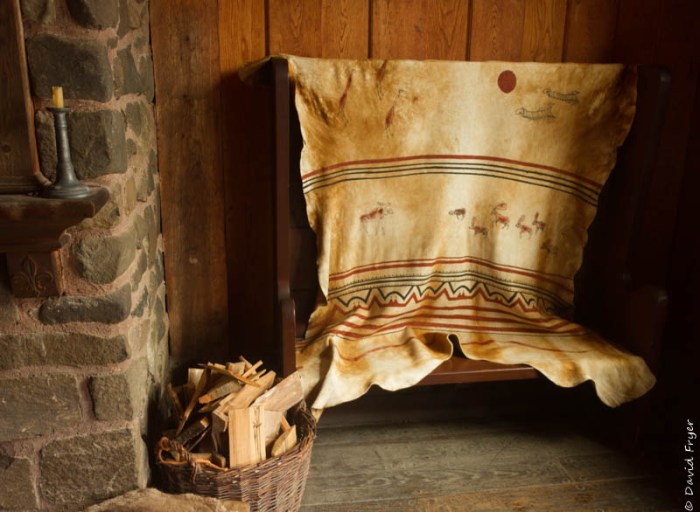
Also, when the Mi’kmaq came to the Habitation to trade for goods, the settlers would given them baked bread. These independent-minded Frenchmen are referred to as Acadians and they often sided with the Mi’kmaq people over those who arrived later from Europe.
In 1607, de Mons’ land grant was revoked and he returned to France. During his absence, the Mi’kmaq took care of the settlement. In 1613, while the settlers were away, an English expedition from Jamestown, VA arrived and burned the buildings to the ground. It was the generosity of the Mi’kmaq that enabled the settlers to survive the winter. Some of the Acadians remained and others from France returned to their homeland. The Habitation was never rebuilt in the 1600s.
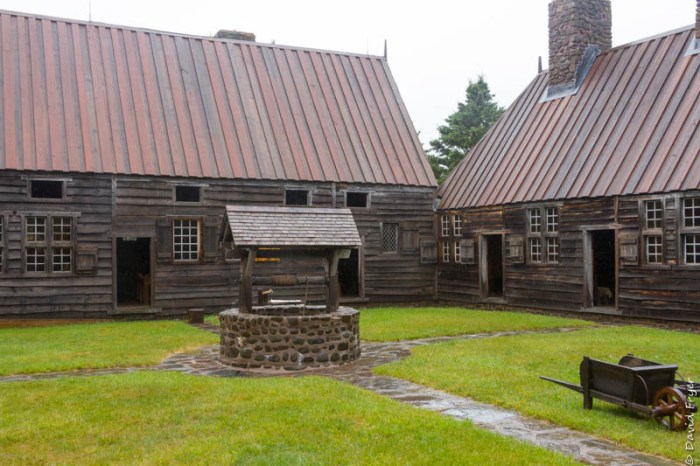
The site of Port Royal remained in ruins for many centuries. In an attempt to preserve some of Canada’s history, the Parks Canada decided to reconstruct the settlement. In 1939, they began the process of erecting the Habitation using the same methods as those used when it was originally built. Many skilled laborers fashioned bricks and shingles by hand and used their shipbuilding expertise to hand-hew the timbers. Kenneth D. Harris, an architect, used Champlain’s descriptions to recreated the original compound. Charles William Jeffreys was an historical artist and he designed the interior of the rooms and the reproductions. An American from Massachusetts, Harriett Tabor Richardson, was instrumental in raising funds for the project. The grand opening of Port Royal was in 1941.
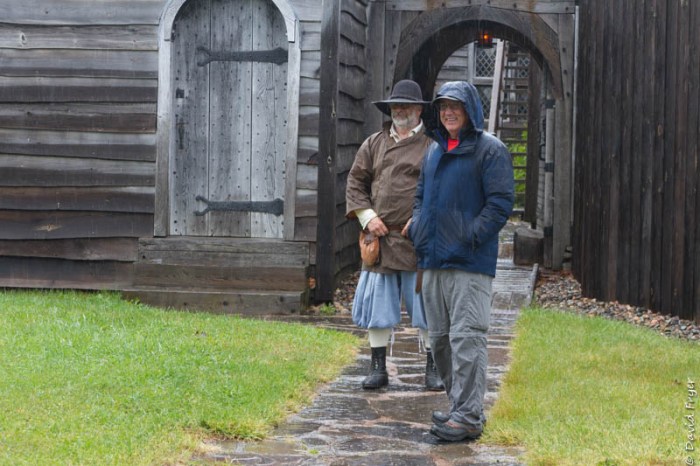
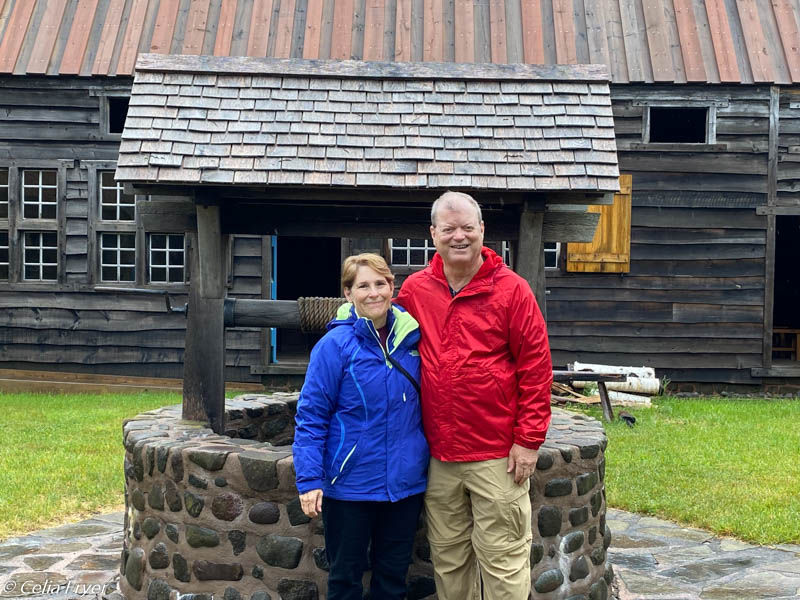
When we arrived on a very rainy day, an enthusiastic docent clad in period garb met us at the entrance and welcomed us to Port Royal. After giving us an overview, we were free to walk through Port Royal on our own. The settlement is rectangular in shape and you can access the rooms from the courtyard. In the center of the courtyard is a well.
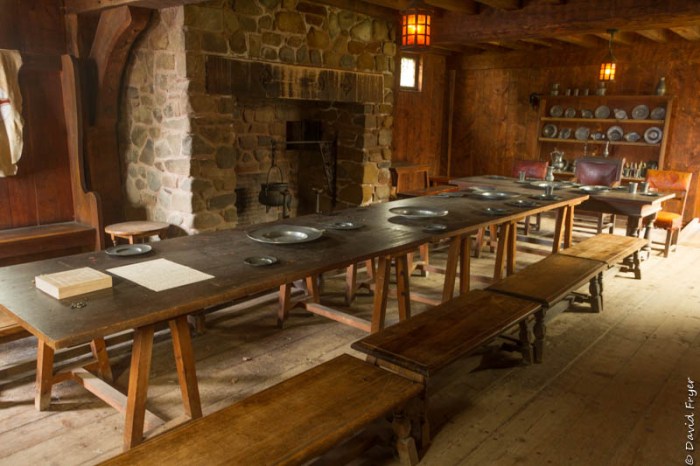
The Common Room is where they ate and had banquets.
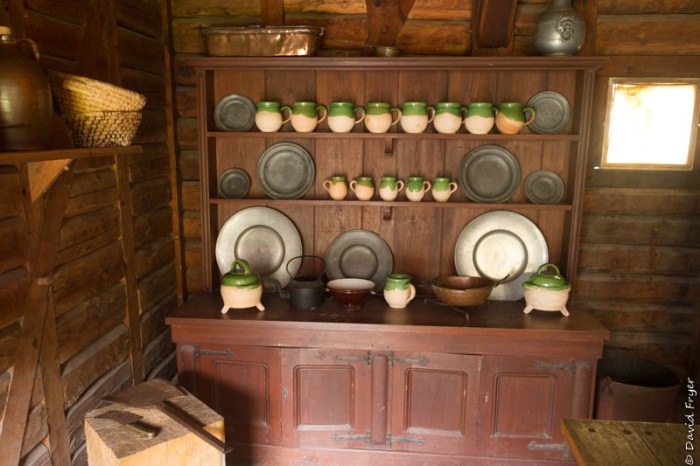
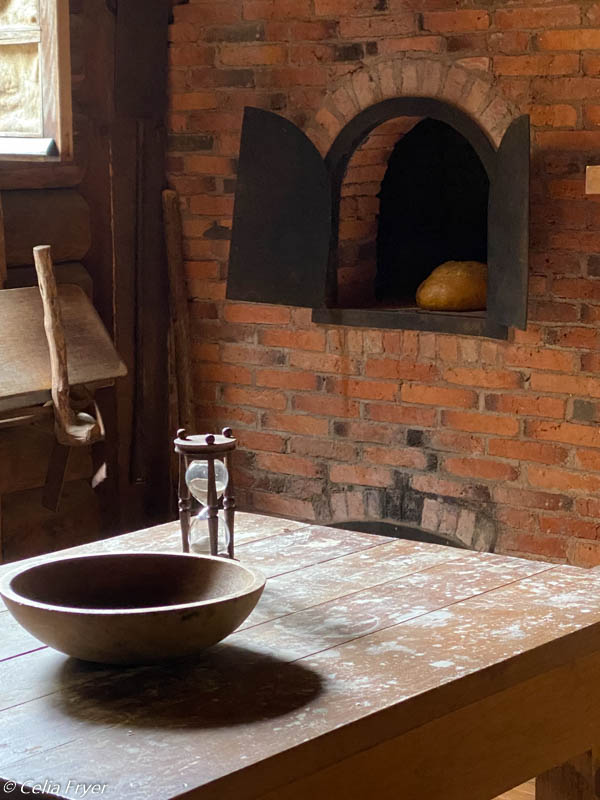
The kitchen with the bakery next door provided meals of peas, beans, rice, salt meats, fish and moose.
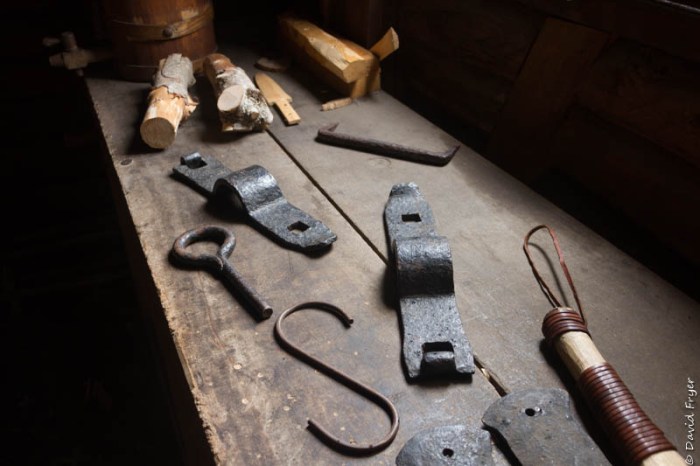
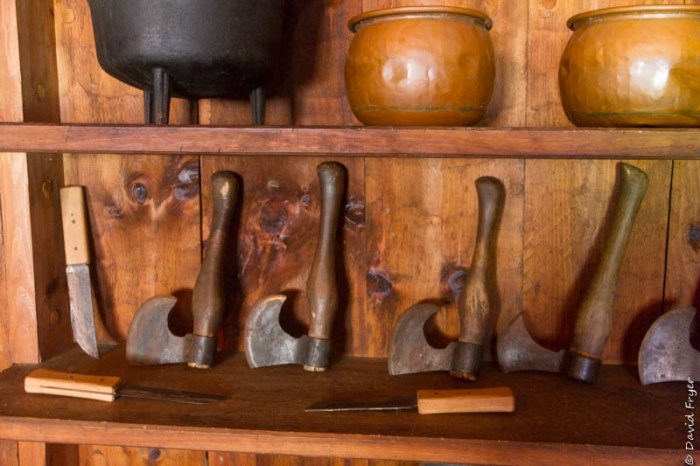
The forge was where tools were fashioned and repaired.

There are rooms for the apothecary, the Jesuit Fathers, the lawyer, and other gentlemen.
The Trading Room, located near the Main Entrance, and the storage room were where the settlers and the Mi’kmaq exchanged furs and other goods.
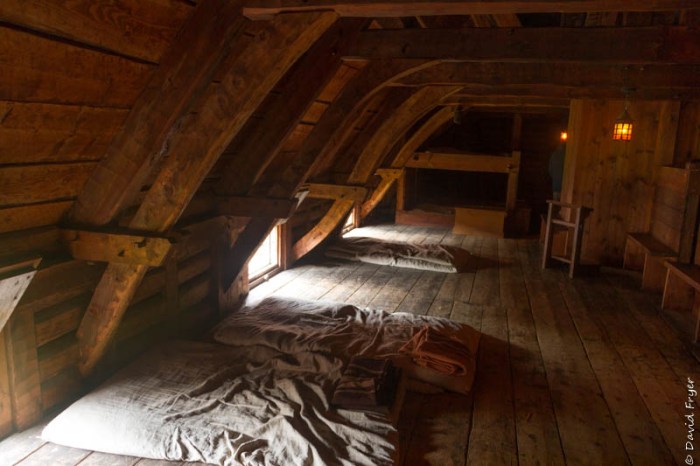
The sleeping quarters were sparse and simple. These and many other rooms made for a fascinating visit.
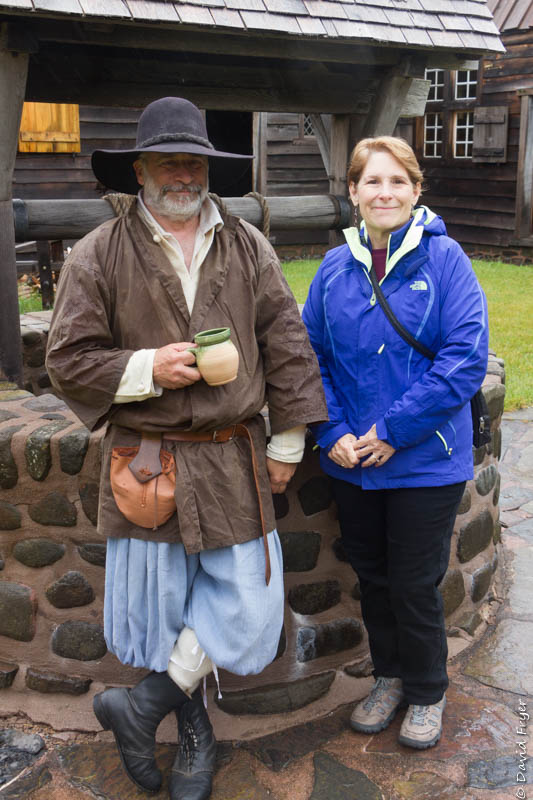
Port Royal National Historic Site is a “must see” to learn about Canada’s early history. The reconstructed Habitation is a testament to Canada Parks’ preservation efforts.
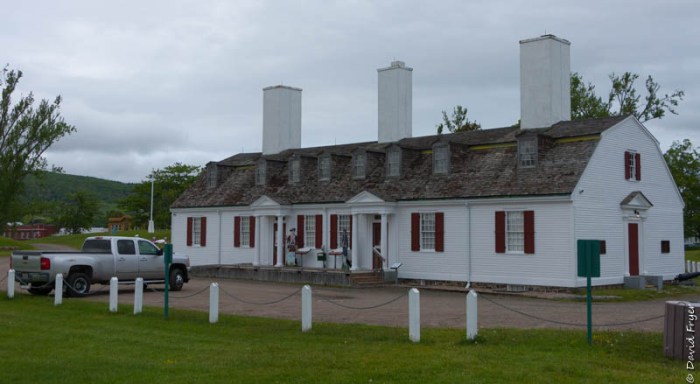
Fort Anne
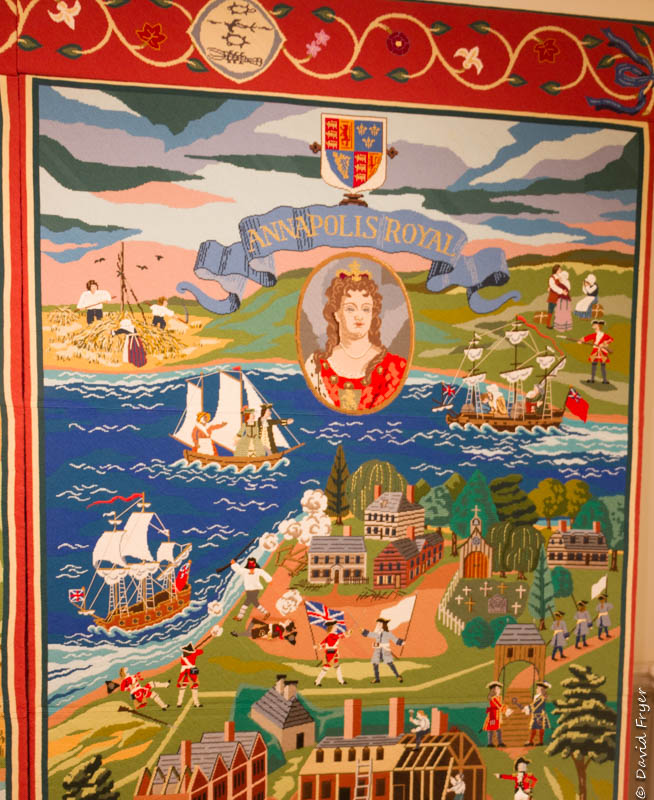
The Scots were the next group to arrive in the Port Royal area. In 1621, Sir William Alexander received permission to create a Scottish colony in North America. He called the area Nova Scotia which in Latin means “New Scotland.” They built Fort Charles along the Annapolis Basin but had to abandon it in 1632 when England gave the land to France. Remnants of Fort Charles lie beneath the fort that the French built in 1636. The French renamed it Port Royal. The British and the French fought for control over this region for over 170 years so sometimes the fort was French and at other times it was British. More than a dozen battles were fought in the 17th and 18th centuries and the fort changed hands between the French and the British seven times. In 1710, the British gained control. The town of Port Royal was renamed Annapolis Royal in honor of Queen Anne. Annapolis Royal became the capital of Nova Scotia until 1749 when the honors went to Halifax. Later Fort Port Royal became Fort Anne. Britain gave the land to Canada in 1883 and it became Canada’s first National Historic Site in 1917.
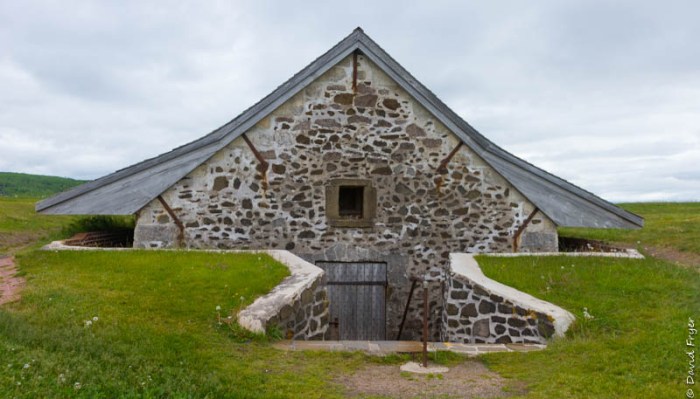
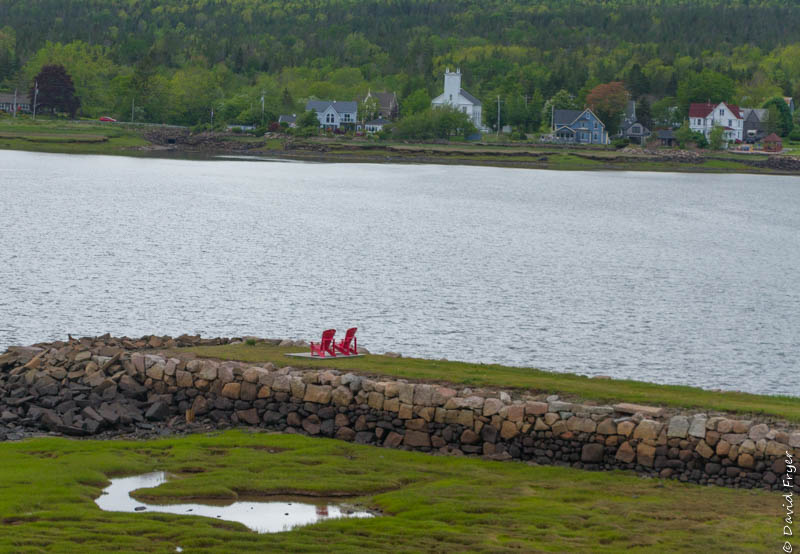
When you visit Fort Anne today, you will see that it is a star-shaped style fort. There are lots of earthwork fortifications that you can explore. There are only two structures that remain: the Officer’s Quarters, where the Museum is housed, and the Powder Magazine. Fort Anne offers great views of the Annapolis Basin and the Museum is well worth seeing.

Annapolis River Lighthouse
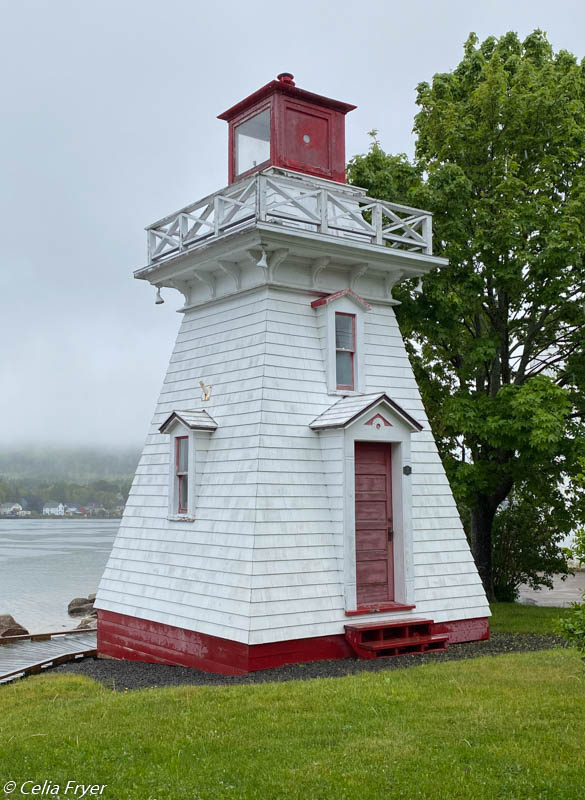
The Annapolis Lighthouse, built in 1889 on the water’s edge, is on St. George Street in the heart of the town. The lighthouse is a white wooden structure measuring 27 ft. tall. The Historical Society of Annapolis Royal acquired it in 2004.
We really enjoyed Annapolis Royal and Port Royal even though it was raining heavily the day we visited these sites. For that reason we did not get to see the beautiful Annapolis Royal Historic Gardens. Maybe we can see them next time.

 Piddlin' Around