
One of the most popular National Parks in Canada is the Kejimkujik National Park in south-central Nova Scotia. The park was facing the province-wide problem of the terrible forest fires and they had banned all fires, plus they did not allow anyone to go into the woods or on the trails. We decided to look for the silver linings in this and we succeeded. Almost everyone canceled their reservations and we had the park almost all to ourselves. The other positive was the copious amount of rain that the province started to experience. While typically rain is not much fun when you are in the middle of national park, Nova Scotia really needed the rain. After a few days of inside activities, the trail ban was lifted and we were able to explore this park.
Kejimkujik (locals call it Keji) is one of the top national parks in Canada for campers. In the busy season, the park is completely booked and full of activity. There are many trails, beautiful lakes to kayak, dark sky activities, fishing and swimming in the large Kejimkujik Lake, and the wonderful Mersey River which runs through the park.
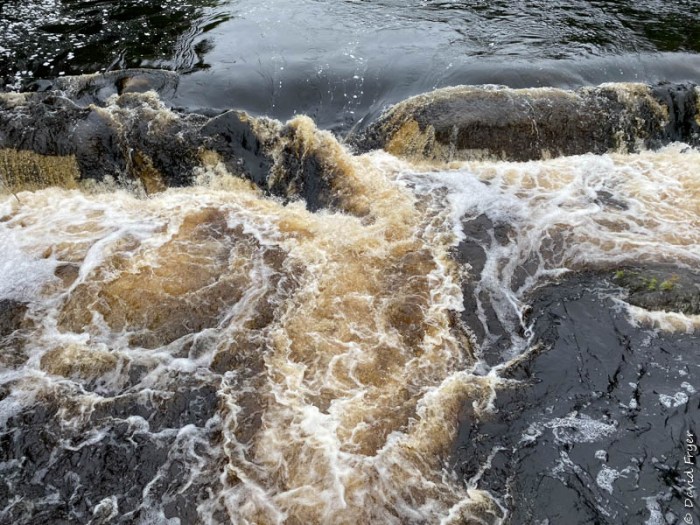
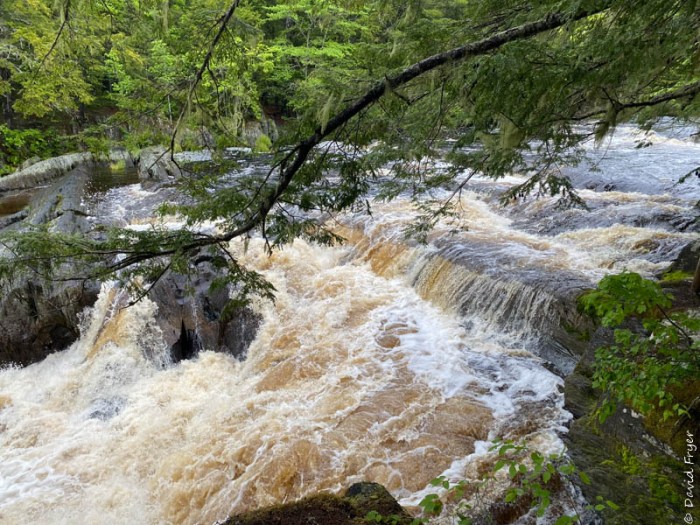
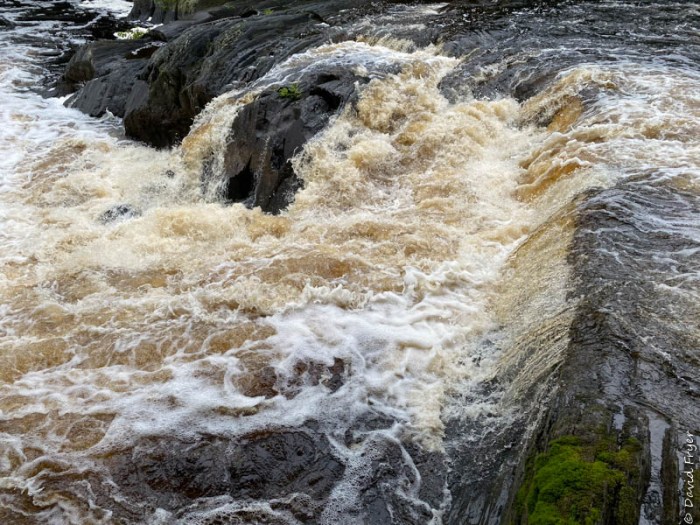
We took a hike along the Mersey River with the objective of finding Mills Falls. It was a beautiful walk along the engorged river following the four days of heavy rain. The falls, while lacking in sheer height, made up for it in volume.

One unusual element of the river is that it has a brownish color and produces a foam that gathers at some points along the Mersey. There are many lakes and bogs in this region. The color and foam comes from the water seeping through these bogs and producing tannins and saponins that permeates the streams.
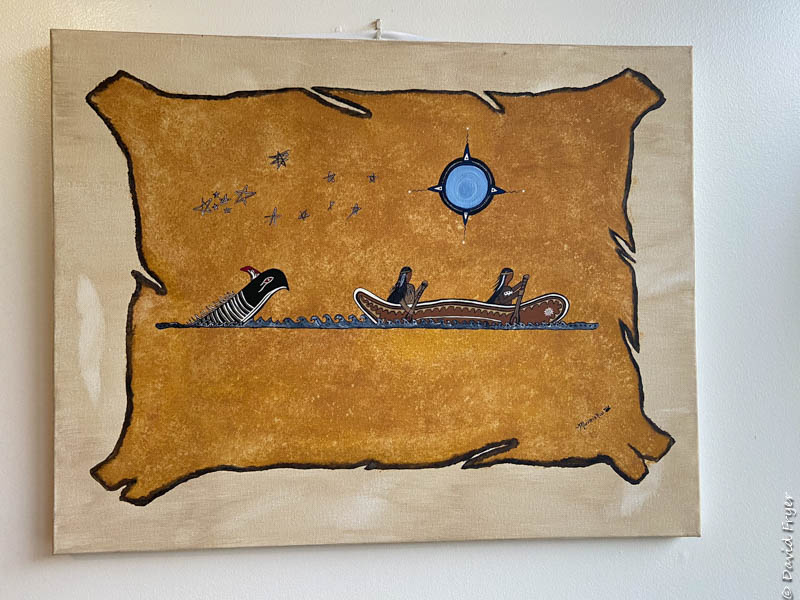
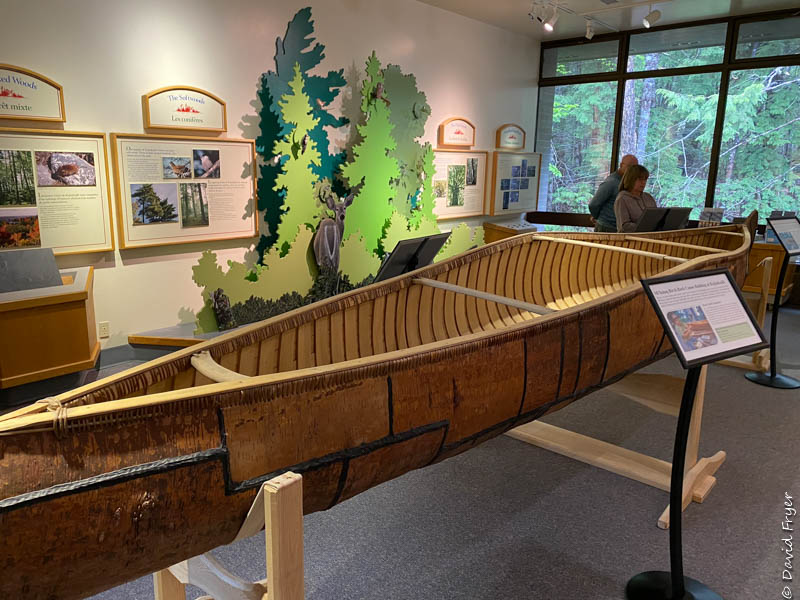
The Mills Trail led up to the Visitor Center that had several exhibits including one about birch bark canoes. These handmade canoes are part of the Mi’kmag people’s heritage. The First Peoples of the Maritime region, the Mi’kmag, had a tremendous impact on the entire region and still do to this day.

Someone has carved a bear out of a stump within the campground!

We heard a very loud machine sound that appeared to be workers with an air-hammer. Turns out it was a woodpecker working on a campground fire extinguisher enclosure (the bird is hard to see but easy to hear!).


Later in the week we took a hike and discovered some spaceship looking accommodations that the park provides. They call them an “Oasis.” They look like they could lift-off at any time.
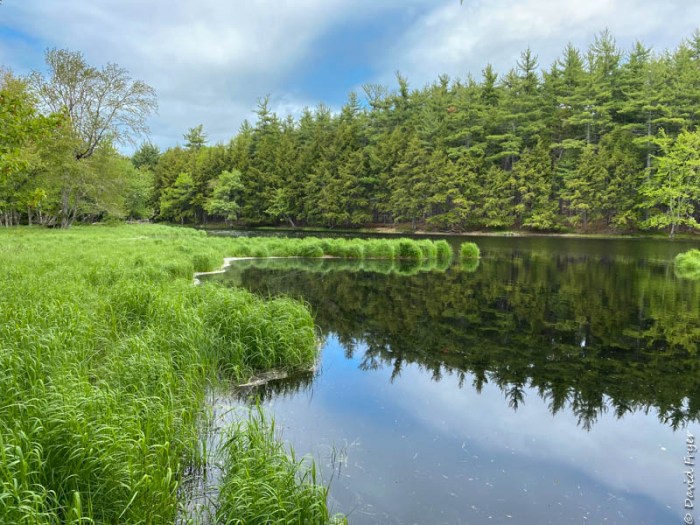
This hike along the lake and upper part of the river had beautiful views. We should have gotten out the kayaks, but did not because the forecast every day threaten rain.

One of the most unexpected highlights of the visit was to meet some very special people. Some of the campers in the park were a group of people seeking to save the Blanding Turtle. This endangered reptile can be found in Kejimkujik. While found in other parts of Canada and the U.S., it is under the highest level of protection here in the park.
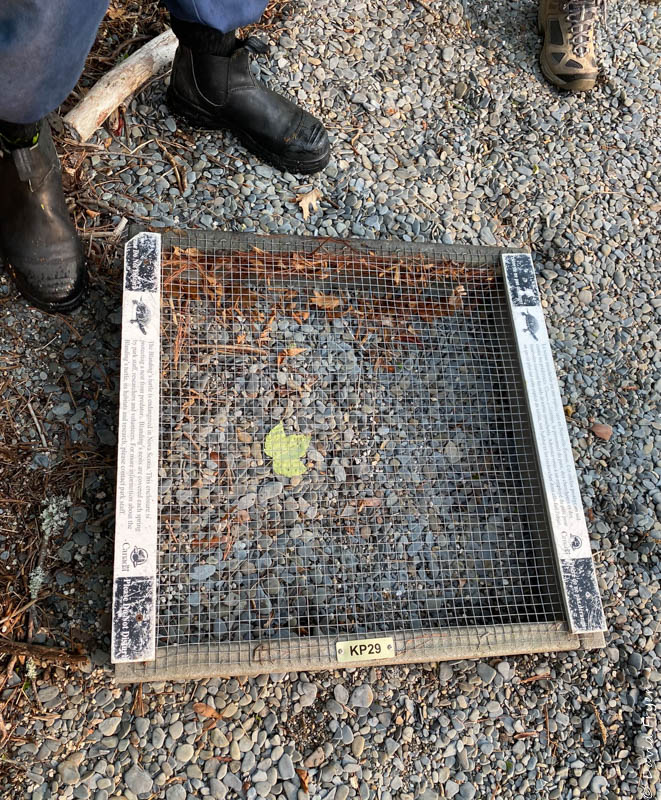
This group of volunteers, numbering about 8-10 people, spend months at the park helping the turtles survive. In June and July the turtles return to their place of birth to lay eggs along the shoreline (earlier in warmer climates). Raccoons and other animals lay in wait to dig them up and have dinner. The volunteers go out in the evenings to watch and see where the turtles lay their eggs. Once the female turtle lays her eggs and leaves, the volunteers secure the nest with a wire cover to protect the eggs.
The Blanding Turtle eggs take 70-120 days to hatch, depending on the weather, so the volunteers return for the months of September and October to remove the wire covers when the turtles, “the size of a toonie,” emerge from their nesting place.
The young turtles do not eat nor do they go into the water for the first year. They are not mature enough to lay eggs for another 20 years, but live up to 80 years. They are not large turtles and have a very distinctive yellow colored neck. Less than two percent of the hatchlings survive so the work here is vital.
The volunteers carve “notches” on the edge of the turtle’s shells which contains a code so that they know where and when the turtle was born. For the first 30 years of the turtle’s life, you can count the rings on the underside of the turtle to see how old it is. After that the rings disappear.
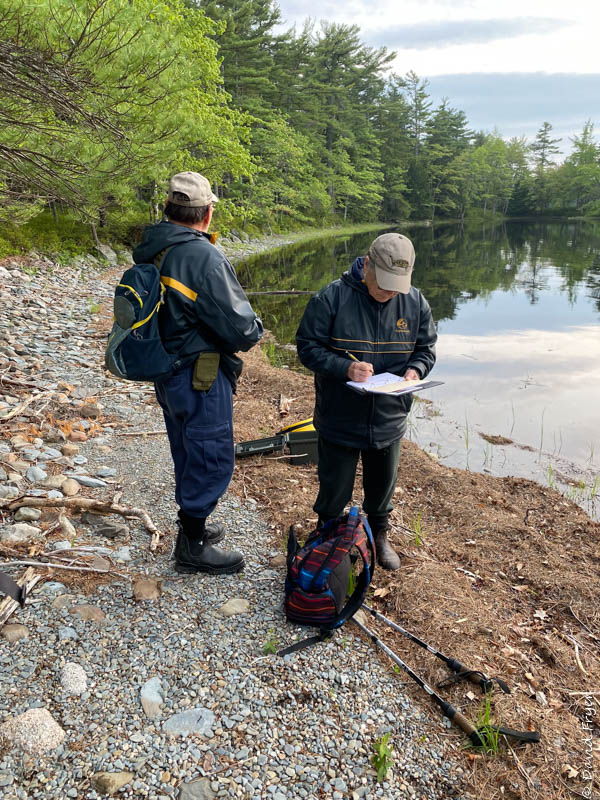
We were fortunate enough to be invited to go and observe the volunteers at work. They record water and air temperature, in addition to other data. They have discovered up to 18 nests and continuously are looking for others.
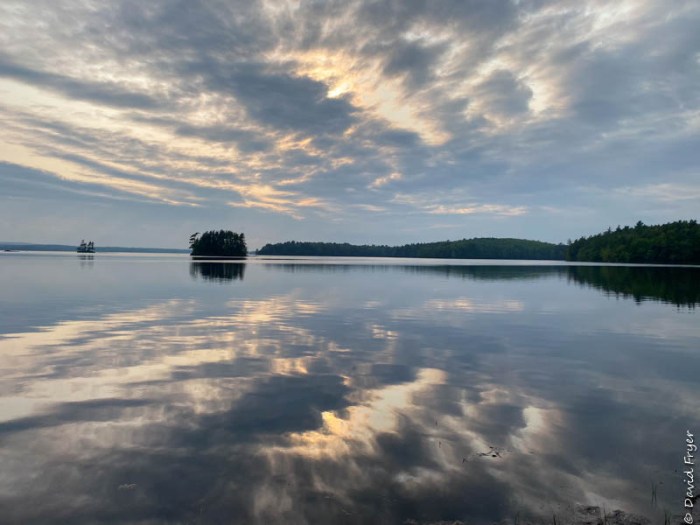
There happened to be a beautiful sunset on the lake that night which made it even more enjoyable.
Like everyone we have met here in the Maritimes, the volunteers are extremely friendly and even invited us to visit their home. Unfortunately for us, they are on the job, away from home, saving turtles, most of the summer.
Next we take day trips to visit the coastal towns on the Nova Scotia side of the Bay of Fundy.

 Piddlin' Around
Hello PiddlinAround!! Hey, we just got all caught up on your travels. Looks like a great time up there in Canada. We are behind you by a few weeks. Maybe our paths will cross somewhere before you head back to Maine.
LikeLiked by 1 person
Good to hear from you! Hope our paths cross soon, so let us know when you are up this way.
LikeLike